Respondents across the surveys spanned a wide age range, with
My Life Since Treatment/Self-Help showing roughly equal representation across
25–64 years. Women made up about 55 % of that survey’s sample. The sample was
predominantly White/Caucasian (85 %) with smaller proportions of other racial/ethnic
groups.
In Tell Us About, just over half of respondents (52.6 %) reported currently ingesting
mood-altering substances, while 47.4 % said they did not. Drinking alcohol was less
prevalent: of the 219 who answered the question, 53 % currently drank and 47 % did
not. When asked about other substances, 52 % reported taking mood-altering
medications prescribed to them and 57 % admitted to using non-prescription or
illegal substances (including marijuana). Frequency of use varied widely: 43 % used
substances daily, 15 % a few times per week and 23 % reported no use. Two-thirds
identified themselves as addicts or alcoholics.
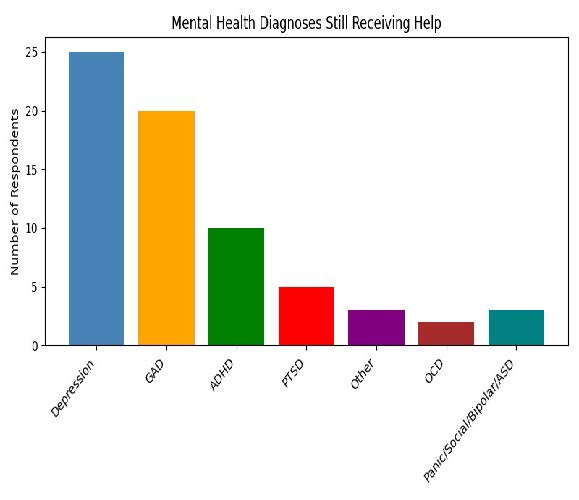
In STAR Matrix, 78 % of participants reported a history of mental-health difficulties
and 74 % had used medications or substances to address those difficulties.
Additionally, more than 93 % acknowledged that substance use had negative effects
on their physical health and 88 % reported negative mental-health consequences.
These findings underscore the high comorbidity between SUD and mental-health
disorders.